
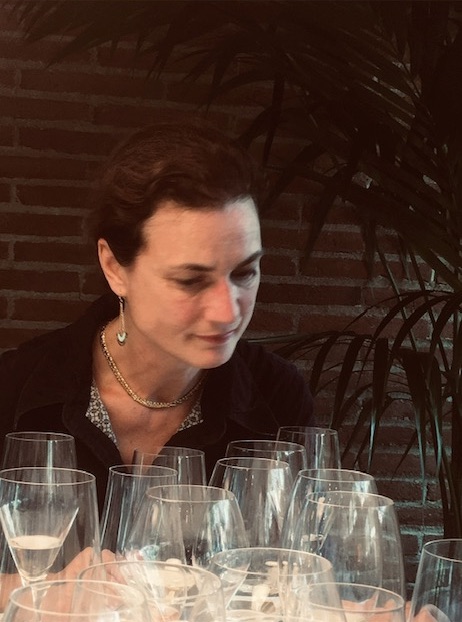
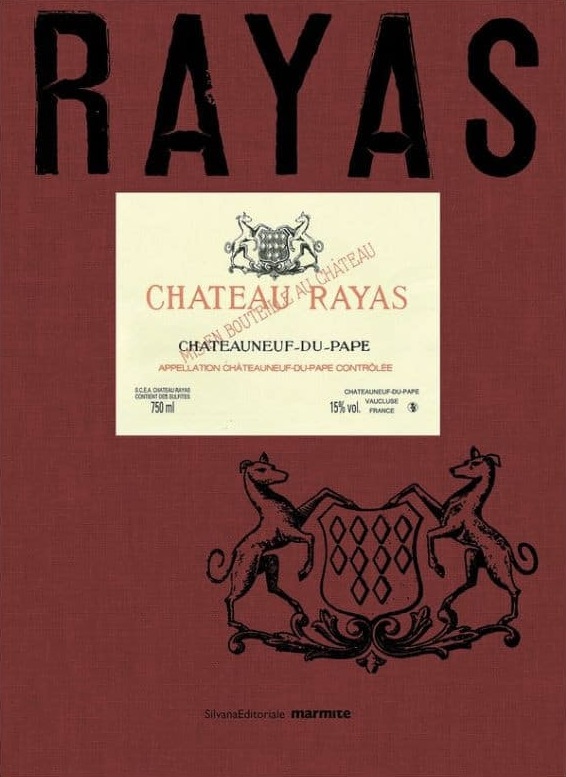
Few people have had the chance to taste the wines of Château Rayas. Those who have are invariably deeply moved by them. Where does this irresistible allure come from? To unravel this mystery, wine specialist Laure Gasparotto and art historian Jérôme Neutres have co-authored the first book dedicated to this mythical Châteauneuf-du-Pape estate and its winemaker, Emmanuel Reynaud, who passed away on November 25. The result of nearly five years of work—exploring the estate, interviewing its guardian, and gathering valuable testimonies—this is an exceptional book.
How did the project come about?
It was initiated by Thomas Abegg, entrepreneur and publisher of the culinary magazine Marmite. He has a deep passion for Château Rayas—so much so that he considers it a work of art and decided to dedicate a sumptuous edition to it, with high-quality paper, printing, and photographs by Ferrante Ferranti.
And where do you come into the picture?
He used to read my work in Le Monde, while I didn’t know him at all. We met, and to be honest, I wasn’t particularly familiar with the subject—I don’t often drink Château Rayas. But I suggested introducing me to Emmanuel Reynaud. When I arrived, I was essentially “tested” through a series of questions and situations. I must have passed, as the project was launched in spring 2021. Nearly five years later, the book was published. Before his passing, Emmanuel Reynaud had just enough time to approve the final proof and express his satisfaction. The book was in print when he died.
Why did you agree to take part in this book?
In 2016, I had already devoted a book to Mas Jullien. In La mécanique des vins, Le réenchantement du Languedoc, Olivier Jullien gave me the keys to understanding a vineyard from this region. I greatly enjoyed the experience. Entering the mental world of a winemaker fascinated me. I approached this new project in the same spirit: without preconceptions, with eyes and ears wide open. And I was more than rewarded. At Rayas, the wine speaks, the empty glass speaks, and the winemaker—guided by a rare kind of down-to-earth common sense—had much to say. He was incredibly generous in sharing his insights. I learned a great deal.
You mention “insights.” The first concerns the history of Château Rayas, which is both recent and decisive…
The estate was acquired by Emmanuel Reynaud’s great-grandfather in 1880. There were no vines at the time. It wasn’t until 1919 that the first bottles of estate wine appeared—and with notable success. Rayas played a role in the creation of wine appellations, starting with Châteauneuf-du-Pape in 1936. It’s proof that myths can emerge quickly. Take Petrus, for example: its wines were barely known before 1945. “Mythical” doesn’t necessarily mean ancient.
Another revelation: the estate itself. What struck you during your first visit?
It’s a magical place. Château Rayas lies in the middle of woodland, on entirely sandy soils that ensure remarkable freshness. Around ten hectares of small plots, surrounded by trees. Everything that winemakers are experimenting with today through agroforestry has long been in place there. And then there’s the exceptionally rich biodiversity, which protects the vines from disease. This estate is designed to adapt to climate change. It is built to last.
“99% of wine is made in the vineyard,” Emmanuel Reynaud used to say. “The vines must feel loved.” What does this approach mean in practice?
As the book’s photographs clearly show, Emmanuel Reynaud spent all his time in the vineyards. He was a man of one place, which he fully inhabited—so much so that he developed an extraordinary understanding of it. Take the 2011 vintage: a third of the grapes stopped ripening and even began to shrivel by mid-September. Instead of discarding them, he chose to vinify them separately while allowing the rest to continue ripening for a later harvest. The first batch reached about 7% alcohol, the second 22%. All that remained was to blend them—100% of the harvest was used.
These practices, along with the use of 80-year-old barrels and aging wines in bottle for over 10 years, reflect a very particular relationship with time. How did this manifest day to day?
He trusted the wine. Refusing to rush it, he waited, allowing it to express itself. He himself never responded hastily—always listening. He could be very quiet, constantly observing. There was something almost mystical about him—he was nearly a Buddhist. We sometimes sat for three hours, talking knee to knee, without even a table between us.
Does this ode to slow time diminish the impact of the vintage?
To be completely honest, I am far from having tasted all the estate’s wines. I experienced them mainly in tank and barrel. What I found is that the vintage effect remains very much present. A 2000 is nothing like a 2013. Château Rayas produces wines of identity, expressing both terroir and vintage.
So what do all these vintages have in common?
Emmanuel Reynaud’s wines share an incredibly fine structure—like lace. They are graceful, with a clear beginning, middle, and end. Deeply sensual, and beautifully profound. Wines that greet you, hold a conversation, and know how to say goodbye.
Beyond Château Rayas, the Reynaud family oversees several other estates: Pignan, Château Fonsalette, La Pialade and Château des Tours. What role do they play?
They provide economic stability—another expression of the family’s down-to-earth common sense. A great wine alone is not enough to sustain an estate; a broader range is essential. Emmanuel Reynaud understood this well. He cared just as much about his Vin de Pays as his Châteauneuf-du-Pape wines. This allowed the latter to age for ten years before release—at reasonable prices. For him, this was not about art, but about the products of traditional farming. No matter how demanding his standards, he refused to let Rayas wines be sold at excessive prices. He even withdrew them from restaurants that didn’t respect this philosophy.
What happens next after Emmanuel Reynaud’s passing?
I don’t have specific information, but I have no doubt that his two sons, Benoît and Louis-Damien, who are both winemakers, will carry on his work. They have absorbed his mindset and inherited his practical wisdom. They learned by example—the best form of transmission. In this respect, Emmanuel Reynaud was particularly generous. He passed on everything he knew. His wines reflect this: they are not marked by ego. That is what makes them great.
And what about your own projects?
I’m currently working on two books to be published this autumn by Michelin Éditions. First, an updated edition of my Atlas des vins de France. I’m delighted to have joined the Michelin catalogue—it ensures the book’s longevity, much like vines planted for a century. I’m also working on a new volume in Les Fabuleux Itinéraires Michelin collection: La France viticole, featuring fifteen wine tourism itineraries across French vineyards, illustrated by Michel Tolmer. More beautiful books to come!