
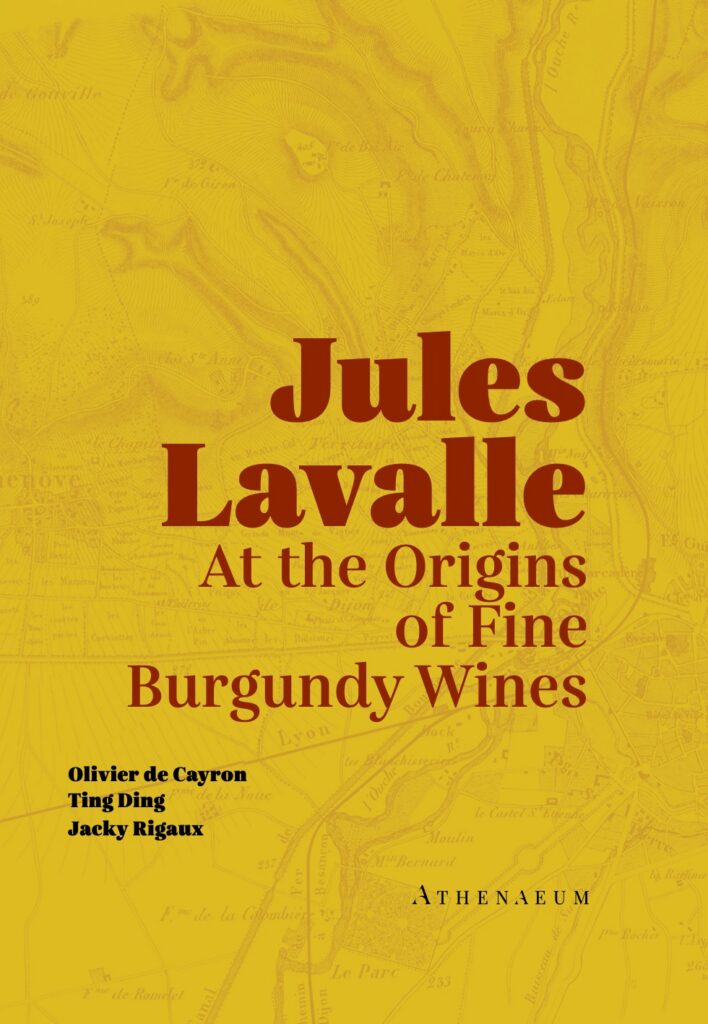
The great-great-nephew of Jules Lavalle (1820–1880), Olivier de Cayron is co-author of Athenaeum’s brand-new publishing project: a compelling biography of this Burgundian physician, botanist, geologist and manufacturer. In 1855, Jules Lavalle authored « Histoire et statistique de la vigne et des grands vins de la Côte-d’Or« , the seminal work that would later serve as a reference when defining the region’s AOC appellations in 1937…
What was the starting point for your book?
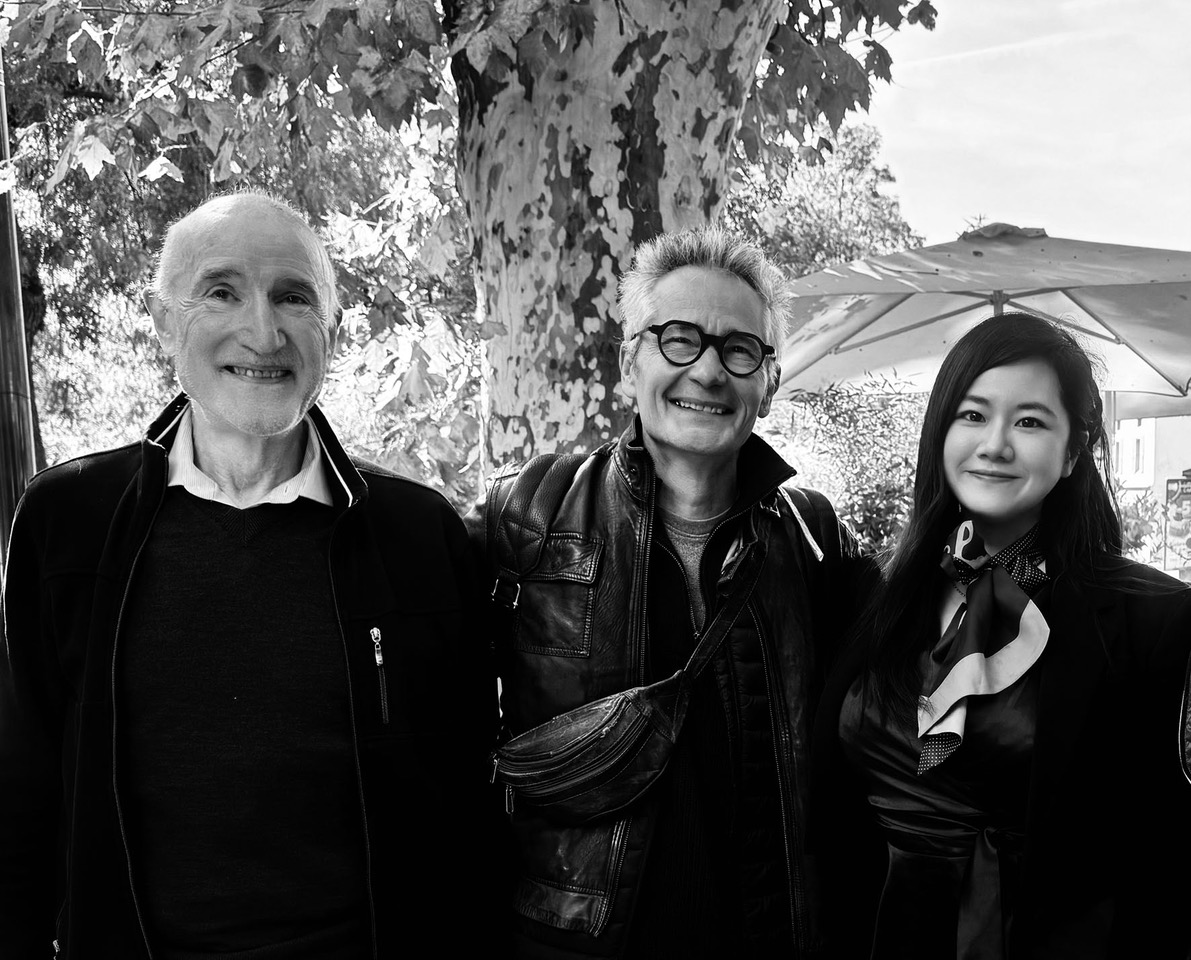
A family story and a series of fortunate encounters. Upon retiring, my father immersed himself in the archives of his illustrious ancestor—so much so that he devoted a first lecture to him in Dijon in 1988. No doubt through atavism, I in turn became interested in Jules Lavalle from 2014 onwards. Testimonies began to pour in, among them that of Ting Ding, a wine expert. We became friends. She joined the International Association of Rare and Old Wines, of which I am now president and she vice-president. We then met Jacky Rigaux, author and researcher behind the revival of geo-sensory tasting… And, little by little, the idea of co-authoring a biography of Jules Lavalle, published by Athenaeum, took shape.
What exactly is « Histoire et statistique de la vigne et des grands vins de la Côte-d’Or« about?
Before 1855, aside from the writings of Denis Morelot, there was little to no comprehensive history of the great vineyards. In Burgundy, after the French Revolution, the know-how of the Benedictine monks was no longer relevant; only ordinary wines really mattered. In the nineteenth century, as interest in fine wines revived, Jules Lavalle sought to make his own contribution. Written with the help of Joseph Garnier, archivist of Dijon, and M. Delarue, a pharmacist-chemist, the book first explores at length the origins of the vine and its evolution, before proposing a meticulous mapping and classification of the Côte-d’Or climats. It was the result of long empirical observations focused on soil quality, exposure and grape varieties—unprecedented at the time. Hence the book’s success, notably when it was presented at the Paris Universal Exhibition in 1867.
Why has this work become such a landmark reference?
First, because of its philosophy: it places the notion of climats at the very heart of Burgundian viticulture. Their true expressions lie at the origin of fine wines. This scientific and cultural approach to the vineyard stands in stark contrast to the one that emerged in Bordeaux in the same year. Published in 1855, the official classification of Médoc and Sauternes crus was based instead on commercial reputation and the prestige of estate ownership. Secondly, because of its accuracy. Just consider this: more than 170 years after its publication, this hierarchy remains valid today. The “têtes de cuvée no. 1” identified at the time are still today’s Grands Crus, just as the “têtes de cuvée no. 2” correspond to our Premiers Crus.
How do you explain such enduring relevance?
Jules Lavalle was not only a scientist; he was also a manufacturer. In 1857, he took over the family faience factory in Premières, where—thanks to his connections with Victor Hugo, Gustave Courbet and others—a whole range of artists became involved. Though a physician, botanist and geologist, he too possessed an artist’s soul, as evidenced by the plates illustrating our book. Not to mention his talents as an urban planner in Dijon, where he worked on the city’s renewal in order to prepare it for the industrial challenges of the twentieth century. All these activities mark him out as a true visionary.
What do you hope this new reading of Jules Lavalle’s life and work will achieve?
Beyond my own family history and my desire to restore my ancestor to the place he deserves, it seems useful—at a time shaped by climate change and broader questioning—to remind ourselves of our fundamentals. This book allows us to highlight the notions of place and climats, and the winegrowers committed to respecting them. More than craftsmen, they are artists in my eyes.